General Military History
 By Gerald Whitcombe, military records archivist · Updated 4 June 2026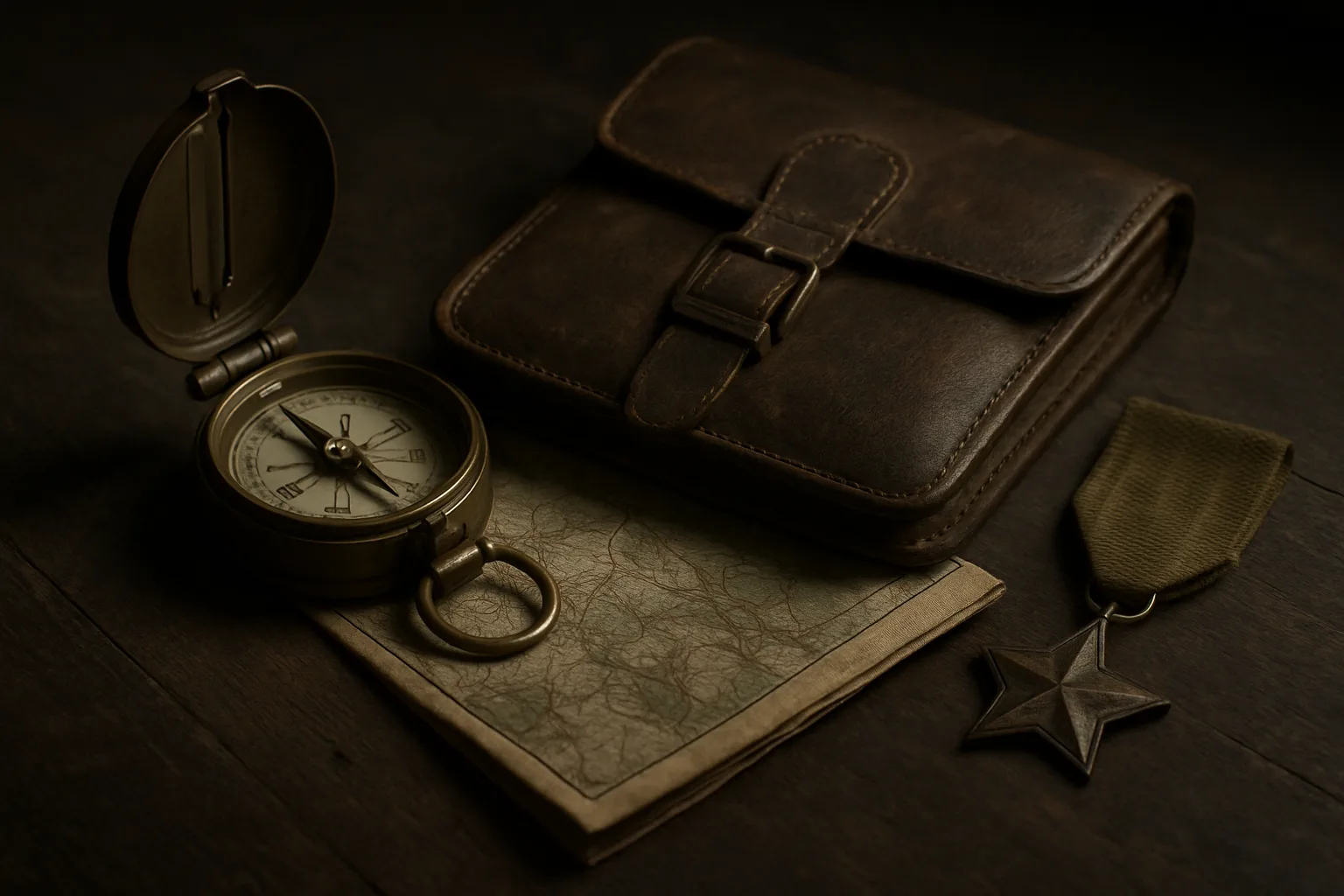
Step back far enough and the history of warfare reads as a single long story, repeating its themes in changing dress. This overview maps the major eras, the threads that run through all of them, and the heritage they leave behind for later generations to study and collect.
The great eras of warfare
Military history is often divided into broad ages, each defined by how armies were raised, armed and moved:
| Era | Defining feature |
|---|---|
| Ancient & classical | Citizen levies and professional legions; the first systematic doctrine |
| Medieval | Feudal obligation, fortification and the slow rise of gunpowder |
| Early modern | Standing armies, drill and the firearm as the decisive weapon |
| Industrial | Mass armies, railways and the heavily documented wars such as the Civil War |
| Modern | Mechanisation, air power and the study of future warfare |
Threads that connect them
Beneath the changing technology, the constants are striking. Logistics decides campaigns in every age. Morale and leadership outweigh numbers more often than not. And the record-keeping that makes research possible — the muster rolls, returns and registers explored in our guide to researching military records — grows steadily richer as states grow more organised. The historian who sees those threads reads any single war more clearly.
Heritage, militaria and the objects that survive
History does not survive only on paper. It survives in objects: a regimental badge, a service medal, a field compass carried through a campaign and kept for a lifetime afterwards. Collecting militaria is, at its best, a form of historical research in three dimensions — each authentic piece a primary source with its own provenance to be traced and verified, exactly as a document would be.
Among the most evocative are the instruments of navigation and survival that soldiers actually carried. An antique military compass, for example, is both a beautiful object and a record of how a campaign was found and fought; serious collectors treat provenance, maker's marks and condition with the same rigour a researcher brings to an archive. Heritage, in this sense, is simply military history you can hold in your hand.
Reading the long arc
To read general military history well is to hold two ideas at once: that every age is distinct, and that the human realities of conflict barely change. The records and objects that survive let us test both — whether in the accounting for the missing, the dense archives of the Civil War, or the disciplined attempt to imagine what comes next. The long arc rewards the patient reader.
Frequently asked questions
How is military history usually divided into periods?
Commonly into ancient and classical, medieval, early modern, industrial and modern eras — each defined by how armies were raised, armed and moved. The divisions are tools for understanding, not hard boundaries; the threads of logistics, morale and record-keeping run through all of them.
Is collecting militaria a form of historical research?
At its best, yes. Authentic pieces — badges, medals, instruments such as field compasses — are primary sources in three dimensions, each with a provenance to be traced and verified with the same rigour a researcher brings to a document.
What stays constant across all eras of warfare?
Logistics decides campaigns in every age; morale and leadership repeatedly outweigh raw numbers; and the gap between plan and reality never closes. The technology changes far faster than the human realities of conflict.